Consumer behaviour
Why people love what they help build
The IKEA effect, and how to put it to work
Manish Kumar Singh7 min read
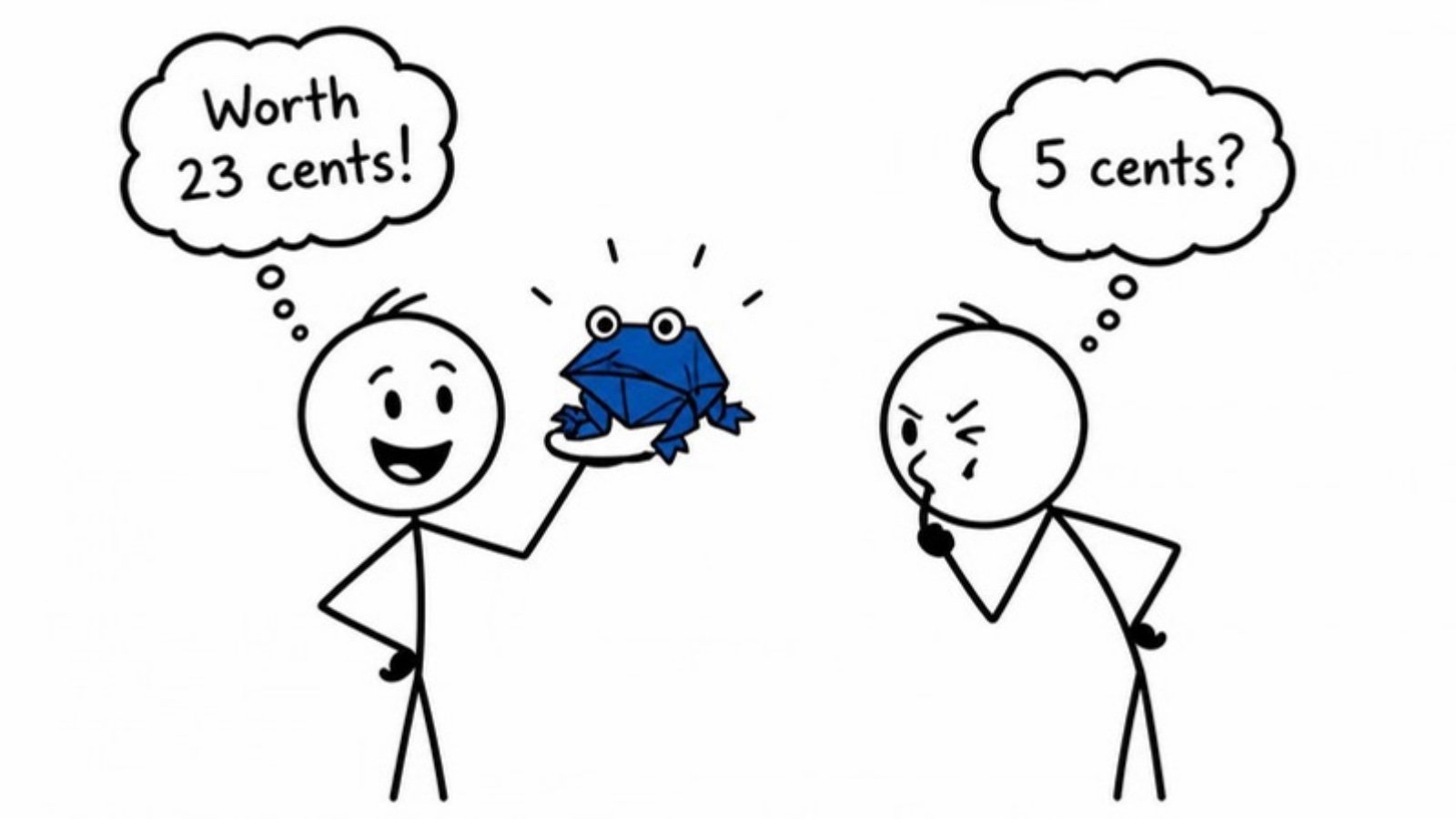
In a student centre in the north-eastern United States, researchers handed people an instruction sheet and a square of good origami paper and asked them to fold a frog or a crane. Then they asked the folders what they would pay to take their creation home. The average bid was 23 cents. Strangers shown the same lumpy frogs and cranes bid 5 cents. Origami made by two experienced folders drew bids of 27 cents.
So the amateurs valued their own work at nearly five times what anyone else would pay, and almost as highly as an expert's. That study, published in 2012 by Michael Norton, Daniel Mochon and Dan Ariely, gave a name to something every flat-pack owner already suspects: the IKEA effect. We love what we help build. For anyone who sells, designs or manages, the interesting part is not that the effect exists. It is the precise conditions under which it appears, and the one condition under which it turns against you.
The egg that probably didn't save the cake
Almost every talk on this subject includes the same story. In the 1950s, instant cake mixes flopped because housewives felt guilty about baking without effort. A psychologist advised General Mills to take out the dried egg and make the cook add a fresh one. The guilt vanished and sales took off.
Norton and his co-authors open their paper with a version of it, though carefully, noting there were likely several reasons for the turnaround. They were right to hedge. The psychologist was real: Ernest Dichter studied cake mixes for General Mills and reported that women felt the mixes were too easy. But the historian Laura Shapiro, whose book Something from the Oven is the usual source for the story, concluded that his precise role in the success of cake mix is unclear.
The details undermine the neat version. Sales of cake mix doubled between 1947 and 1953, so there was no early flop; the slowdown came between 1956 and 1960, when sales grew only 5 per cent. The fresh-egg idea wasn't new either. In a patent filed in 1933 and granted in 1935, John D. Duff of the Pittsburgh molasses firm P. Duff and Sons and a co-inventor wrote that dried eggs were "somewhat of a handicap from a psychological standpoint" and designed a mix that needed fresh ones. Fresh eggs also simply made better cakes, since dried-egg mixes tended to stick to the pan and taste too strongly of egg. And the two giants of the market went opposite ways, with General Mills asking for fresh eggs while Pillsbury kept selling complete mixes, which sits awkwardly with the idea that one egg saved an industry.
What Shapiro describes instead is a shift in where the cook's effort went. Magazines and advertisers began treating the baked layers as merely the first step, and the real achievement as the frosting, the decoration, the finished showpiece. That is a more useful lesson than the egg. Cracking an egg is a chore. Decorating a cake is authorship.
Why labour turns into love, and when it doesn't
The oldest explanation is effort justification. In 1959 Elliot Aronson and Judson Mills invited 63 college women to join a discussion group on the psychology of sex. Some were simply admitted. Others first had to pass an "embarrassment test": reading mildly awkward words aloud or, in the severe version, reading obscene words and explicit passages from novels to a male experimenter. Everyone then heard the same recorded discussion, deliberately made as dull as possible, about the sexual behaviour of lower animals. The women who had endured the severe test rated it most favourably.
The logic comes from Leon Festinger's theory of cognitive dissonance. "I went through that" and "this is worthless" are uncomfortable to hold at the same time. The pain can't be undone, so the mind upgrades the prize.
Norton's team noticed something the classic study never tested. Every woman in it got into the group. Nobody's effort failed. So the IKEA experiments varied exactly that. In one, students built small Lego models of 10 to 12 pieces, then bid on their own model and a partner's. Builders bid twice as much for their own set, 84 cents against 42. Another group built their model and then took it apart, and their preference for their own set shrank until it was no longer statistically reliable, even though they had handled the bricks for longer than the builders who kept theirs. In a third experiment, people who finished assembling an IKEA storage box bid $1.46 for it. People stopped two steps short bid 59 cents, although they held every piece needed to finish it at home.
So the effect is not about effort alone, or about time spent touching a thing. It is about the effort paying off. The authors link it to a basic need to feel competent, to produce the outcomes you set out to produce. A finished box is evidence that you are capable. A half-built one is evidence of the opposite, and nobody pays a premium for that.
Nor is this a one-lab curiosity. A meta-analysis published in Psychology & Marketing in 2026 pooled 55 studies with 5,454 participants and found a moderate, robust effect of self-assembly on valuation, which held whether or not people could customise the product.
Effort is an amplifier, not a sweetener
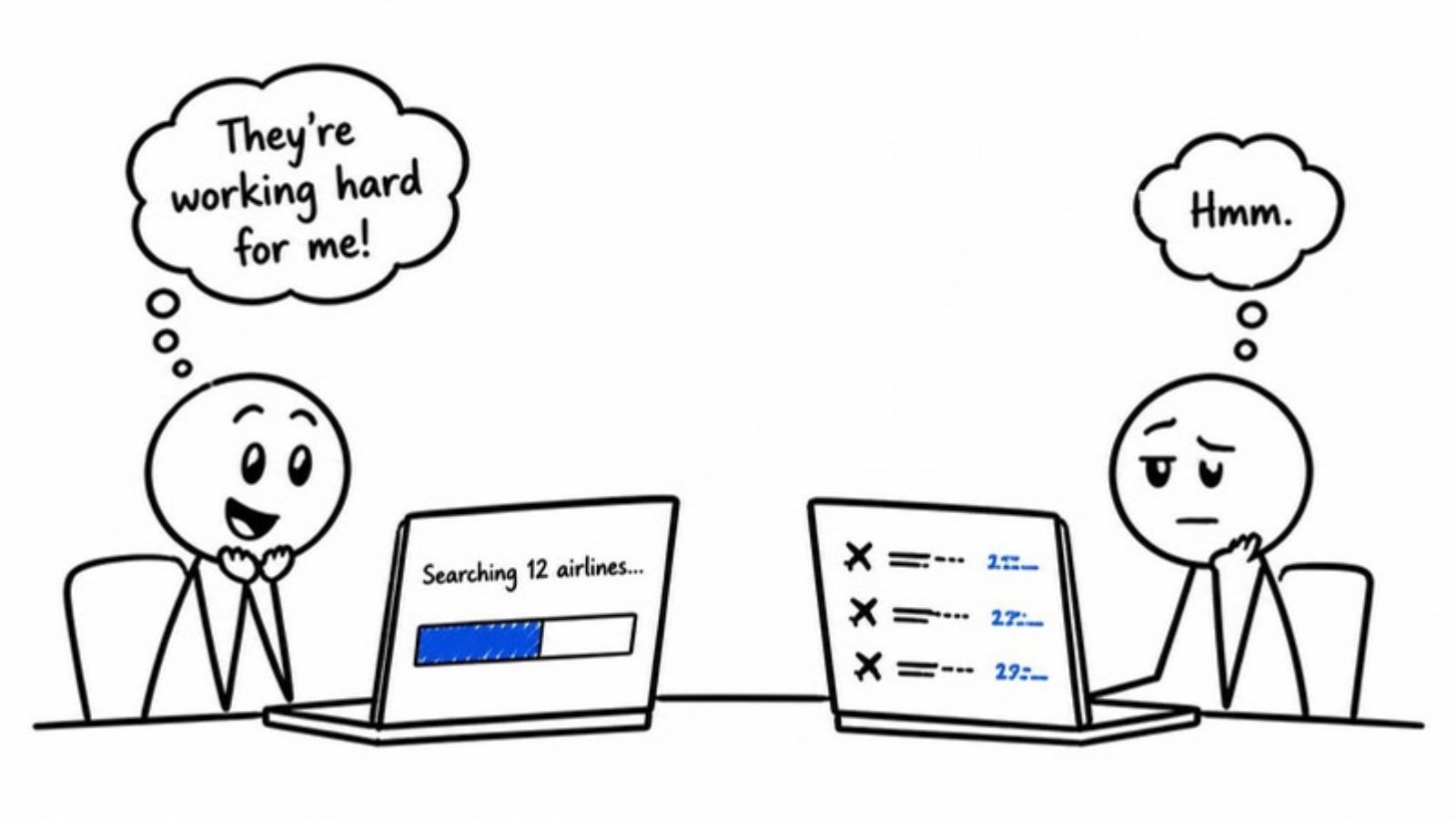
The same logic applies when the effort is someone else's. In 2011 Ryan Buell and Michael Norton built mock travel-search websites. On one, results appeared instantly. On another, users waited while a progress bar filled. On a third, they waited while the site listed each airline it was searching. The flights and prices at the end were identical.
Given a straight choice against the instant site, people chose to wait for the transparent one 62 per cent of the time when the wait was 30 seconds, and 63 per cent when it was 60 seconds. When the wait came with only a progress bar, just 42 and 23 per cent chose it. Watching the work being done made a slower service more attractive than a faster one. Buell and Norton call this the labor illusion, and they traced it to perceived effort and a feeling of reciprocity: the site worked hard for me.
Then came the twist. In an online-dating version, everyone received a "perfect match" with a 96.4 per cent compatibility score, but the photo varied. When the site visibly laboured and then served up an unappealing match, users rated it lower than an instant service delivering the same result. Showing effort made a bad outcome worse.
Put the two lines of research side by side and one rule appears. Effort, whether your customer's or your own, doesn't add a fixed amount of value. It multiplies the outcome. A good result plus visible effort feels better than a good result alone; a bad result plus visible effort feels worse than a bad result alone. Nikolaus Franke, Martin Schreier and Ulrike Kaiser found a similar shape in mass customisation in 2010. People paid more for products they had designed themselves, but the boost depended on how the design turned out and on how much of it they felt they had contributed.
Effort doesn't add a fixed amount of value. It multiplies the outcome.
Putting it to work, and catching it in yourself
In onboarding, build the first session around something the user finishes and is proud of, not around configuration. A settings screen is the egg. A first dashboard, first campaign or first published page with their name on it is the frosting. Keep it short enough that nearly everyone completes it, because the half-built box shows that unfinished effort earns little of the extra love.
Protect what people have built. The Lego builders who dismantled their own work lost most of their attachment to it. A product that wipes a trial user's work, or a process that quietly discards a client's contributions, is running the unbuild condition on its own customers.
In proposals and client work, give the buyer a real hand in shaping the result, then make sure their contribution is visible in the final version. If value tracks perceived contribution, a workshop whose output never appears in the deliverable wastes the effect. And show your working when the news is good. Walking a client through the hours behind a campaign that underperformed is likely to make the conversation harder, not easier.
Finally, turn it on yourself. The origami folders valued their frogs at nearly five times what strangers would pay. Norton and his colleagues suggest the same happens to homeowners who price their hand-laid brick path far above what any buyer sees in it. Founders, strategists and agency teams fall for their own drafts in exactly this way. The work you built is the work you will overrate, so ask someone who didn't build it before you defend it.
The lesson
People love what they help build only when the effort succeeds and their part is visible, so design small, finishable wins they can see as their own.
Try this week: Pick one onboarding step or client deliverable and give the other person one visible piece to make, such as a headline they choose or a first page they publish, that they can finish in one sitting and will still see in the final version.
A weekly letter on how people think, buy and work
One idea every Tuesday on psychology, marketing, sales, productivity and technology, with one thing to try that week.
Subscribe free